App Design Budgets : What High-Growth Teams Need
A practical, line-item breakdown of realistic app design and development budgets for high-growth startups and non-technical leaders, covering cost drivers, pricing models, and how to avoid ex
Why app design budgets are so confusing (and why they matter)
If you’ve tried to answer “What will this app cost to design and build?” you’ve probably seen estimates ranging from $5,000 to $500,000. That spread is useless when you’re a founder or operations leader who needs real numbers for a board deck, funding round, or internal business case.
App design cost varies widely because it depends on scope, quality expectations, and how you staff the work. But you can still build a realistic budget range if you understand the main cost drivers and typical price brackets for professional UX and UI design, prototyping, and development.
This guide focuses on what high-growth teams should expect to spend in North America/Europe for a commercial-grade product. It breaks down design vs development, explains common pricing models, and offers benchmark ranges you can confidently use for planning, even before talking to an agency or independent developer.
Use it as a budgeting framework, not a quote. Your actual proposal will depend on business model, regulatory needs, and the complexity of your product.
Key cost drivers: what actually makes app design expensive?
Before jumping to line items, it helps to understand the levers that move your app design price up or down. When you ask, “how much does it cost to hire an app developer or design team?”, what you’re really asking is how these factors will play out for your project.
Major cost drivers include:
Product complexity: Simple content apps are much cheaper than transactional, marketplace, or real-time communication products.
Platform coverage: Designing for iOS only vs iOS + Android + web can double or triple the effort.
Depth of UX work: Basic wireframes cost far less than full discovery, user research, and design systems.
Team seniority: Senior product designers and architects cost more per hour but usually ship faster and with fewer reworks.
Location: A US or Western Europe agency may cost 2–4x more than a team in Eastern Europe, Latin America, or India.
Regulatory and security needs: HIPAA, SOC 2, or fintech-grade security pushes up both design and engineering effort.
Most high-growth teams underestimate the time required for UX research, interaction design, and iteration. Those phases don’t just make the app pretty; they de-risk your engineering spend by catching flaws before you commit to code.
UX research & strategy: discovery that saves money later
Many founders want to skip discovery to “move faster.” In practice, cutting UX research tends to make the overall application design cost higher because you pay for rework during development. A solid discovery phase aligns business goals, user needs, and technical constraints.
For a first version of a mobile app, you can expect a structured discovery and UX strategy phase to include stakeholder interviews, user interviews or surveys, product vision and success metrics, user flows, and initial information architecture. A focused discovery normally runs 2–4 weeks for a single core product, scaling up with complexity or the number of user types.
At typical agency or senior freelancer rates, that translates to roughly $5,000–$25,000 depending on scope and geography. Teams that want a very tight, time-boxed approach often use a design sprint format inspired by the Google Ventures Design Sprint, which compresses research, ideation, and prototyping into about a week.
As a rule of thumb, discovery and UX research should represent 10–20% of your total app design and development budget. If it’s much less, you’re probably under-investing in strategy; if it’s much more, you may be over-analyzing before testing with real users.
Wireframes, UX flows, and interaction design
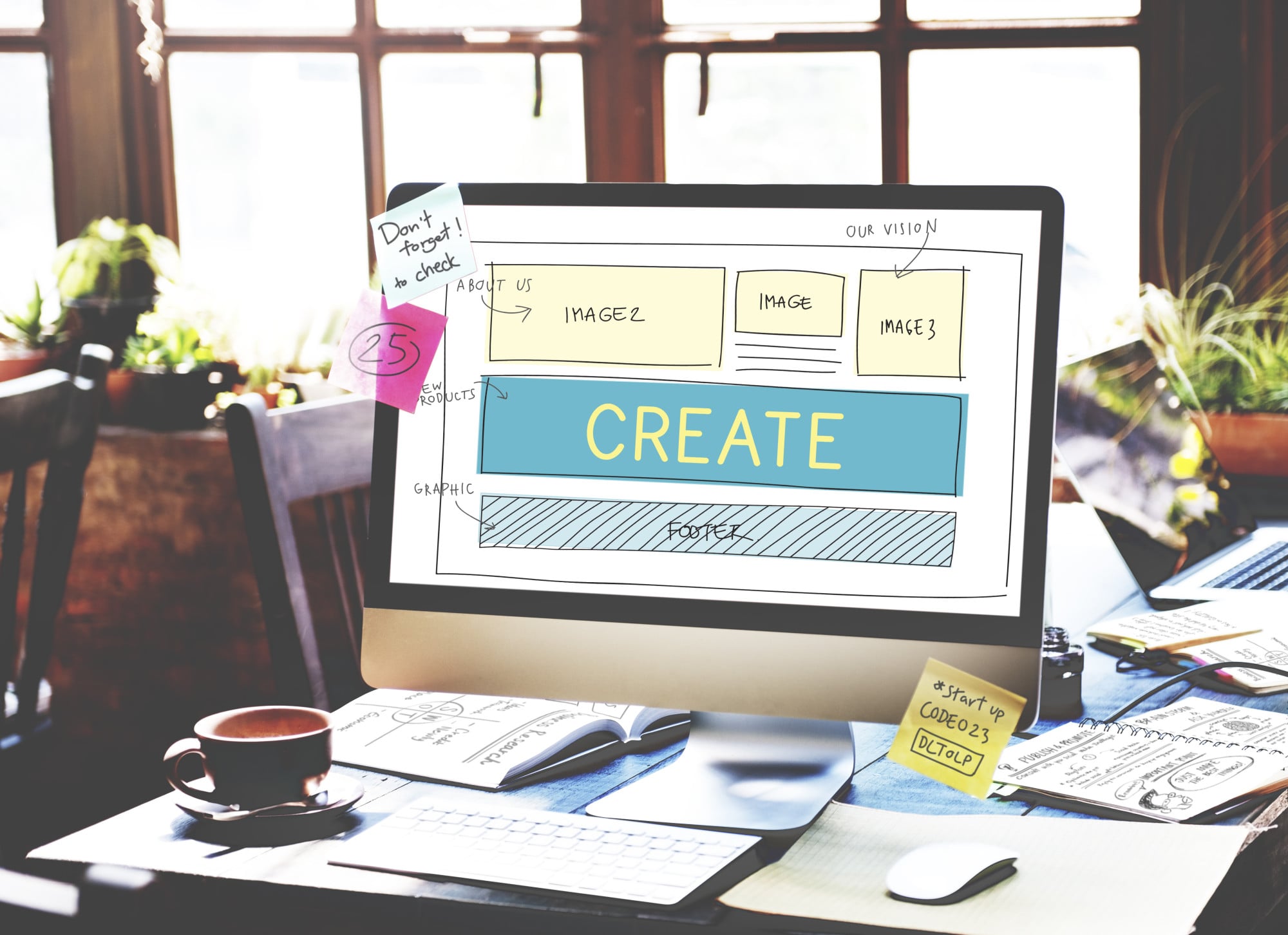
Once your team is aligned on product goals and user journeys, the next step in the app design process is UX wireframing and interaction design. This is where high-level ideas become concrete screens and flows your developers can build from.
Wireframes focus on layout, hierarchy, and functionality rather than visual polish. They answer questions like “Where does the user go next?” and “What information is required on this screen?” For a typical startup MVP with 20–40 unique screens and a few core flows (onboarding, account creation, core transaction), you can expect 80–200 hours of UX work depending on complexity.
At a professional rate, that often equates to approximately $8,000–$30,000 for thorough UX design for a cross-platform product. Teams targeting a single platform (say, iOS only) with a simple feature set can land at the lower end of that range, especially if they reuse common patterns from platform guidelines like Apple’s Human Interface Guidelines.
When evaluating a quote for UX flows and wireframes, look for clarity in deliverables: the number of flows covered, the number of screen variations, and how many rounds of iteration are included in the app design cost before additional change-orders kick in.
Visual UI design, design systems, and brand integration
UX wireframes answer “what happens where.” UI design answers “how it looks and feels.” For high-growth teams planning to scale, this is also the phase to invest in a lean design system that keeps future work consistent and efficient.
A typical UI design engagement will cover moodboards or initial concepts, high-fidelity screen designs for key flows, states for error/loading/empty conditions, and core design system tokens like colors, typography, spacing, and basic components. Expect more work if your product requires highly customized charts, interactive visualizations, or heavy brand storytelling.
For a single platform MVP, a realistic UI design budget is often $10,000–$30,000. For multi-platform work with a design system and dozens of screens, budgets of $25,000–$60,000 are common. Investing in a reusable component library during this phase can lower your long-term application design cost because later features cost less to design and build.
If your brand is not yet defined, some agencies will bundle a lightweight identity package (logo refinements, color palette, typography) into the app design price. Make sure proposals separate those costs so you can accurately compare “pure product design” vs broader brand work.
Prototyping and usability testing
Clickable prototypes are one of the most effective ways to validate your app before you commit to expensive engineering. Tools like Figma, Sketch, and InVision make it possible to simulate user flows realistically enough for meaningful feedback sessions and even investor demos.
A lean prototyping phase typically includes building an interactive prototype of your most critical flows, recruiting representative users, facilitating test sessions, and synthesizing insights into design updates. For a focused MVP, this may add 40–100 hours of work, or roughly $4,000–$12,000 depending on the level of facilitation and analysis.
Usability testing can be done remotely and on a budget, especially if you tap your existing customer base or early-access list. Even five to eight carefully run tests can surface major issues. According to the Nielsen Norman Group, small samples identify the majority of usability problems, making this a cost-effective step that reduces downstream rework for both designers and developers.
When you consider how much it costs to hire an app developer and keep them working for weeks, the marginal expense of a structured test round is usually minor compared to the savings from avoiding wasted build cycles.
Development costs: translating design into a working app
Even though your immediate focus may be design, you can’t plan a credible budget without understanding development ranges. For most software products, engineering will take 2–5x the effort of design, depending on architecture, integrations, and performance requirements.
A small, focused MVP built by a reputable nearshore or offshore team may start around $40,000–$80,000 for one platform with modest complexity. A more feature-rich, multi-platform app built by a US or Western Europe agency can quickly reach $150,000–$400,000 or more. These ranges assume professional planning, QA, and project management, not just raw coding.
Key elements that influence the cost to hire app developers include the technology stack, native vs cross-platform approaches, third-party integrations, and testing and QA standards. To see typical ranges by region and tech stack, benchmarking resources such as the annual JetBrains Developer Ecosystem report and various mobile development salary surveys are useful data points.
As you evaluate proposals, pay attention to how well vendors translate your UX/UI designs into a technical roadmap with phased releases. A team that pushes back on scope and suggests sequencing features is often more realistic than one that promises everything in a single, tight deadline.
In-house vs agency vs freelancers: staffing models and pricing
The way you staff your product heavily impacts your app design price structure. Each approach—in-house hires, a specialist agency, or independent freelancers—has trade-offs in cost, speed, and control.
Hiring in-house designers and developers offers deep product context and long-term continuity, but it requires salaries, benefits, and time to recruit. Agencies provide a ready-made team and proven process at a higher hourly rate, ideal when you need to move quickly or don’t have product leadership in place. Freelancers can be very cost-effective and flexible, especially when you have a strong internal product owner to coordinate their work.
For high-growth but lean teams, a hybrid approach is common: use an external partner for end-to-end UX/UI and initial build, then transition to an internal team for ongoing iterations. When comparing options, normalize pricing to an approximate monthly burn: how much are you really paying per month for the complete team needed to ship your first version?
Ask potential partners to clarify what’s included in their app design cost: strategy, research, UX, UI, prototypes, handoff specifications, and design system assets. This will help you compare different proposals on a like-for-like basis.
Typical budget ranges for MVP, V1, and beyond
While every product is unique, high-growth teams can anchor budgets around three common stages: prototype/MVP, version 1, and scale-up. Assuming professional design and development standards, realistic all-in ranges often look like this for commercial, non-trivial apps:
Clickable prototype / lean MVP test: $25,000–$75,000 including discovery, UX/UI, and a basic build or robust prototype.
Market-ready V1 (one platform, moderate complexity): $80,000–$200,000 for full design and development.
Multi-platform or complex V1: $150,000–$400,000+ depending on integrations and security/compliance needs.
Ongoing evolution (post-launch): Often budgeted as a monthly product team cost of $25,000–$100,000+ per month.
Within those ranges, design typically accounts for 20–35% of the total budget; engineering and QA consume the rest. If a proposal allocates only a token amount to UX/UI but promises a sophisticated product, be cautious—those costs tend to surface later as change orders or rework.
Remember that app design cost is not just about pixels; it’s about making strategic trade-offs between features, platforms, and polish levels so your budget lines up with your runway and growth goals.
Hidden and ongoing costs founders often miss
Even the best upfront scoping can be undermined by underestimating ongoing and indirect expenses. When planning how much it costs to hire an app developer or app design agency, factor in the full lifecycle of your product rather than a one-off build.
Commonly overlooked items include hosting and infrastructure, third-party APIs and SaaS tools, app store developer accounts and compliance costs, analytics, monitoring, and crash reporting tools, ongoing bug fixes and minor enhancements, and periodic design refreshes or UX improvements driven by user feedback.
As a rule of thumb, plan to spend 15–25% of your initial build cost annually on maintenance and incremental enhancements. If your initial project cost is $200,000, a realistic yearly run-rate for keeping the product healthy is often in the $30,000–$50,000+ range, depending on usage and how aggressively you continue to ship improvements.
Building a simple financial model for at least 24 months of product investment will help you communicate expectations clearly to investors or stakeholders and avoid the shock of “unexpected” follow-up invoices.
How to request and compare quotes like a pro
To avoid wildly inconsistent proposals, you’ll want to send a clear, structured brief to every vendor. The more precise you are about user types, critical flows, platforms, and constraints, the more accurate your app design price estimates will be.
At minimum, a solid request for proposal should describe your product vision and business model, primary user personas, must-have vs nice-to-have features, target platforms and devices, regulatory or compliance requirements, desired launch window and constraints, and how you’ll measure success. Attaching rough sketches or user journey maps can dramatically improve the quality of responses you receive.
When evaluating responses, normalize costs using a simple spreadsheet that breaks each proposal into discovery, UX design, UI design, prototyping and testing, development, QA, and project management. Flag where vendors are under- or over-weighted compared to peers and ask clarifying questions rather than focusing only on the lowest headline number.
For a deeper understanding of digital project scoping and estimation techniques, resources like the Atlassian Agile estimation guide can offer helpful context on how experienced teams think about effort and risk.
Key takeaways for planning your app design budget
Professional app design for a serious MVP typically falls in the $25,000–$75,000 range, with full design and build for a V1 often landing between $80,000 and $200,000+ depending on complexity.
Discovery and UX research should usually account for 10–20% of your total budget and significantly reduce the risk of expensive engineering rework.
UX and UI design together often represent 20–35% of the overall application design and development cost, with engineering, QA, and project management consuming the rest.
Staffing model decisions—in-house hires, agencies, or freelancers—meaningfully affect your app design price structure and time to market.
Plan for 15–25% of your initial build cost annually for maintenance, enhancements, and occasional design updates.
Standardizing your RFP and breaking proposals into comparable phases is the best way to compare what you really get for each dollar spent.
Budgeting across prototype, V1, and scale-up phases helps you align investment with milestones instead of treating the app as a one-time project.
Conclusion: turning fuzzy estimates into a concrete plan
App design and development will be one of the most significant early investments for a digital product company. While you’ll never get a perfectly precise number before detailed scoping, you can absolutely move beyond vague internet estimates and plan with confidence.
By understanding the major cost drivers, separating UX, UI, and engineering efforts, and thinking in phases (prototype, V1, and ongoing evolution), you can build a budget that matches your runway and your growth ambitions. Treat discovery and testing as risk-reduction tools rather than optional extras, and scrutinize staffing models and scope assumptions as carefully as you would any other major capital expense.
As you engage with agencies, freelancers, or internal candidates, use the ranges and frameworks in this guide as reference points, not hard caps. Strong partners will help you refine these numbers based on your unique constraints and opportunities.
If this helped clarify your thinking, share it with your co-founders or operations team, and use it as a starting point for your next budgeting conversation. What’s the single biggest unknown still blocking you from putting real numbers on your app roadmap?