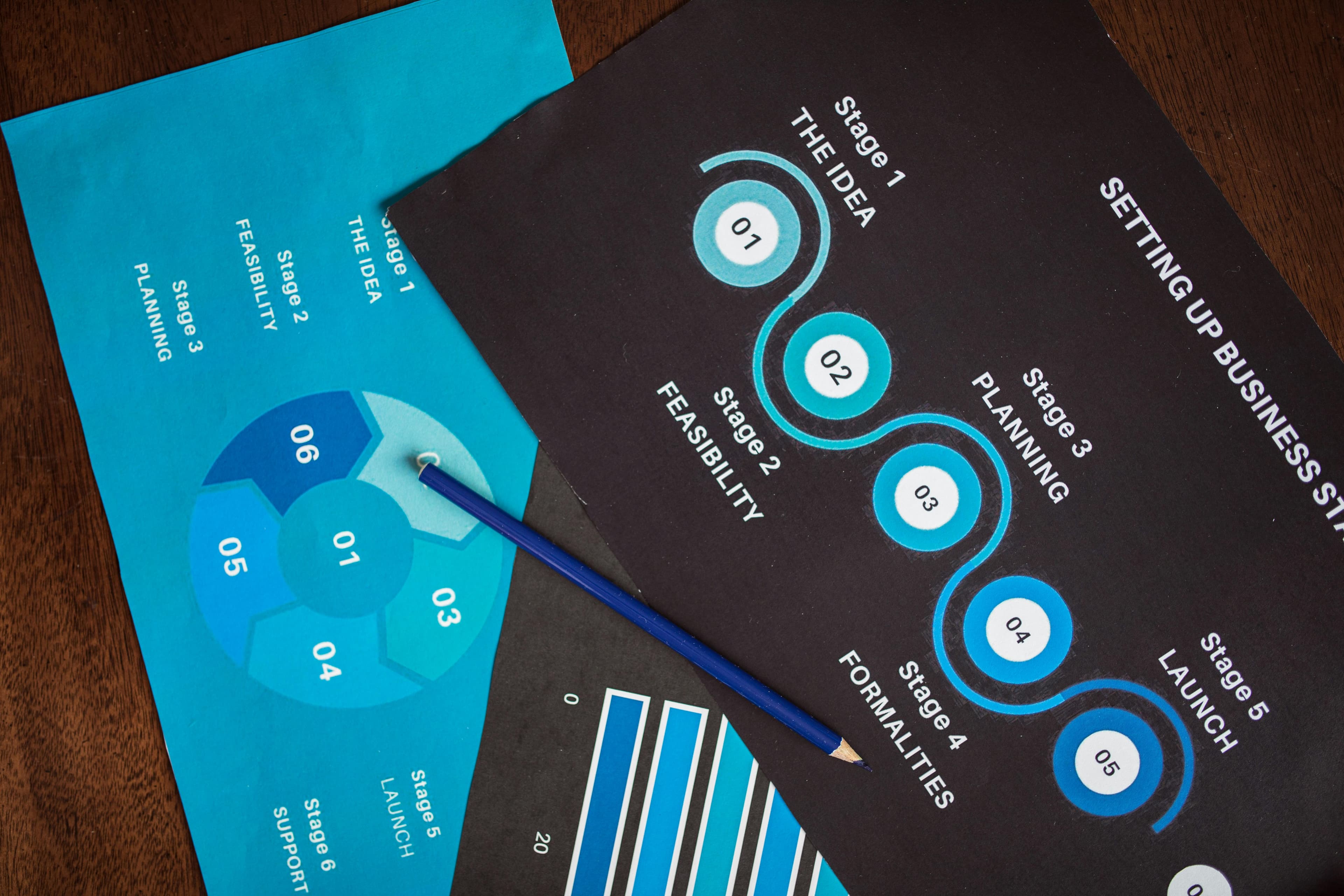
Step-by-Step Roadmap for Safe AI Business Integration
A practical, step-by-step roadmap for CEOs, COOs, and transformation leaders at mid-market B2B companies to integrate AI into products and workflows safely, with clear governance, risk contro
Why AI Requires a Roadmap, Not Just Experiments
AI promises efficiency, new revenue, and better decisions, but mid-market B2B companies cannot afford chaotic experimentation. Uncoordinated pilots, shadow IT tools, and vendor-driven decisions create risk: data exposure, broken workflows, and regulatory issues. A structured roadmap for AI business integration helps you move from scattered experiments to an intentional portfolio of AI use cases tied to strategy.
Leaders who thrive with AI treat it as a long-term capability, not a one-off project. That means aligning AI initiatives with business goals, establishing governance, and building internal skills. Without this, even the best models or tools turn into shelfware. In this article, you’ll get a practical, step-by-step approach used by experienced AI strategy consulting teams to integrate AI safely while maintaining operational stability.
The roadmap below is designed for CEOs, COOs, and transformation leaders who need to show tangible value within 6–18 months, without betting the company on unproven technology.
Clarify Strategic Goals Before Choosing AI Use Cases
The biggest mistake in AI business integration is starting with tools instead of outcomes. Before you touch models or vendors, define what success looks like for your business. This aligns stakeholders and keeps AI from becoming an expensive science project.
Start by anchoring AI initiatives to 3–5 strategic priorities over the next 2–3 years. For most mid-market B2B companies, these fall into themes like profitable growth, operational efficiency, customer experience, and risk reduction.
Translate those priorities into specific, measurable objectives that AI could influence, such as reducing SLA breaches by 30%, shortening quote-to-cash cycle time by 15%, or cutting manual report prep by 50%. This gives you an objective way to judge which AI ideas are worth exploring.
Identify top business priorities and constraints (margin targets, capacity limits, customer SLAs).
Define 3–7 measurable outcomes where AI could create leverage.
Align the executive team on what “good” looks like in 12–18 months from AI.
Set guardrails up front: which areas are off-limits for now due to risk, regulation, or change fatigue.
By framing AI around outcomes, you give your future AI implementation consultant or internal team a clear mandate, rather than a vague directive to “do something with AI.”
Map Your Processes and Data Readiness
Once you know what you want to achieve, examine whether your processes and data can support AI. Most mid-market firms underestimate this step. AI is only as strong as the workflows and data structures it plugs into.
Begin with a high-level map of value streams tied to your goals: lead-to-opportunity, quote-to-cash, incident-to-resolution, procure-to-pay, or manufacturing planning. For each, identify where decisions are made, where people are doing repetitive work, and where delays occur. These are prime candidates for AI augmentation.
Next, assess your data. AI systems need clean, accessible, and secure data sources. Evaluate what data you have, where it lives (CRM, ERP, ticketing, spreadsheets), how reliable it is, and who owns it. You don’t need perfection, but you do need enough quality and coverage to support your first AI use cases.
Many companies find value in a lightweight data and process assessment led by internal ops leaders, supported by an AI business consulting partner. The goal is not exhaustive documentation, but a pragmatic view of what is feasible in the next 6–12 months.
Map 3–5 core processes linked to your strategic AI objectives.
Inventory key systems and data sources used by those processes.
Score data on basic criteria: completeness, accuracy, accessibility, and sensitivity.
Highlight quick-win areas where data is already strong and workflows are digital.
This assessment prevents you from choosing glamorous AI projects that are impossible with your current data and systems.
Select High-Impact, Low-Risk AI Use Cases
With strategic goals and process maps in hand, you can now select specific AI use cases. Focus first on projects that are high-impact but relatively low-risk and technically feasible. These early wins build trust and funding for more ambitious efforts.
A practical approach is to evaluate each candidate use case along four dimensions: business value, technical feasibility, data readiness, and risk/change impact. Give each a simple score (e.g., 1–5) and visualize them on a 2x2 matrix: value vs. feasibility. Target your first 3–5 pilots in the high-value, high-feasibility quadrant.
Common early-stage use cases for mid-market B2B firms include AI-assisted customer support, sales email drafting, lead scoring, document summarization, and intelligent routing or triage of tickets and tasks. These typically augment existing teams rather than replace them and can be turned off if they misbehave.
Generate a long list of potential use cases from leaders and frontline teams.
Score each use case on value, feasibility, data readiness, and risk.
Pick 3–5 priority use cases for pilots over the next 6–12 months.
Avoid highly sensitive or regulated processes (e.g., pricing decisions in strict industries) until your governance is mature.
At this stage, many companies benefit from an external AI implementation consultant to challenge assumptions and keep the portfolio balanced.
Design a Responsible AI Governance and Risk Framework
Safe AI business integration depends on governance: who decides what gets built, what standards apply, and how you handle failures. Governance should be lightweight but firm, enabling innovation while managing risk.
Start by defining clear roles. Typically, you need an executive sponsor (often the COO or CIO), a cross-functional AI steering group, and process owners accountable for each AI use case. Document decision rights for approving pilots, moving to production, and decommissioning tools.
Next, establish principles for responsible AI. Many companies adopt guidelines inspired by frameworks from organizations like the OECD AI Policy Observatory, covering fairness, transparency, privacy, and accountability. Translate these into simple, practical rules your teams can follow.
Require risk assessments for each AI use case, including data sensitivity and potential harm.
Define which tasks must always have human oversight (e.g., final approvals, regulatory reporting).
Set standards for data security, retention, and access for AI tools.
Create a process for incident reporting and post-mortems when AI outputs cause issues.
Good governance protects you from reputational, legal, and operational damage, and reassures employees that AI is being introduced thoughtfully, not recklessly.
Build a Realistic AI Implementation Roadmap
With priorities, use cases, and governance in place, you can create a concrete AI implementation roadmap. This turns vague ambition into a sequenced plan with timelines, owners, and dependencies.
Your roadmap should cover at least 12–18 months and balance quick wins with foundational investments. For each selected use case, define phases: discovery, proof of concept, pilot, and production. Estimate effort, costs, and required skills. Identify shared enablers such as data pipelines, integration patterns, or AI platforms that multiple use cases can leverage.
Sequence work to minimize disruption to core operations. That might mean running early pilots in less mission-critical teams, or scheduling higher-risk cutovers during slower periods. Align roadmap milestones with budgeting and planning cycles, so you can secure resources in time.
Create a 4–6 quarter view of AI initiatives, grouped by domain (e.g., sales, service, operations).
Assign clear owners for each use case and cross-functional enablers.
Highlight key dependencies and risks, such as hiring needs or system upgrades.
Review and adjust the roadmap quarterly based on results and changing conditions.
A visible roadmap gives your organization confidence that AI is being handled in a disciplined, transparent way rather than via ad-hoc experiments.
Run Proofs of Concept That Minimize Operational Risk
Before integrating AI into live workflows, validate ideas through focused proofs of concept (POCs). The aim is to learn quickly about feasibility, performance, and user acceptance—without putting your core operations at risk.
Each POC should have a specific hypothesis tied to business outcomes, such as: “Can we reduce average ticket handling time by 20% using AI-generated suggestions?” Limit scope: small user groups, narrow data sets, and sandboxed environments. Measure both quantitative performance and qualitative feedback from users.
To maintain safety, ensure that during POCs, humans remain in full control. AI recommendations should be advisory, with clear labeling and easy ways to override or ignore them. Avoid connecting early POCs directly to external customers or critical systems until you’ve validated behavior.
Define success criteria and metrics for each POC before you start.
Limit POC duration (e.g., 6–12 weeks) to avoid endless experimentation.
Use anonymized or synthetic data where possible in early tests.
Decide clearly at the end of each POC: scale, iterate, or stop.
Disciplined POCs help you avoid sunk-cost traps and focus investment only on AI initiatives that demonstrate real value and safety in practice.
Plan for Integration, Change Management, and Training
The technical success of an AI model does not guarantee business impact. To incorporate AI into your business safely, you must plan for integration with existing systems and handle the human side of change.
Integration starts with architecture: how will AI components interact with your CRM, ERP, ticketing, or custom applications? Work closely with your IT and security teams to design secure, maintainable connections, ideally through APIs and standardized patterns. Document failure modes and fallbacks: what happens if the AI service is unavailable or returns low-confidence results?
On the human side, involve frontline staff early, not just at go-live. Explain the purpose of AI tools, how they were tested, and what controls exist. Provide scenario-based training, showing real examples of when to rely on AI suggestions and when to be cautious. Emphasize that AI is there to augment their work, not secretly replace them.
Build integration plans that include testing, monitoring, and rollback strategies.
Run pilot programs with clear feedback channels and quick iteration cycles.
Offer hands-on training sessions and reference guides tailored to each role.
Recognize and reward teams that adopt AI responsibly and share learnings.
Effective change management reduces resistance, uncovers issues early, and turns employees into partners in your AI transformation instead of skeptics.
Measure ROI and Continuously Improve AI Systems
To keep investment and trust, you must show that AI is delivering business value—and adjust when it does not. This requires a measurement framework and continuous improvement loop.
For each AI use case, track a small set of outcome metrics (e.g., cycle time, cost per transaction, error rates, customer satisfaction) alongside adoption metrics (who is using it, how often) and quality metrics (model accuracy, user overrides). Compare results to your pre-defined baselines and targets.
Establish regular review cadences—monthly for active pilots, quarterly for mature systems—where stakeholders examine performance, discuss incidents, and agree on improvements. Some optimizations may be technical (model retraining, better prompts); others may be process-related (adjusted workflows) or human (additional training).
Build dashboards for each AI use case showing key performance indicators.
Log and review user feedback, especially cases where AI was wrong or unhelpful.
Schedule periodic model and prompt reviews to address drift and new business conditions.
Decide when to scale a solution to more teams or regions, and when to retire underperforming ones.
This continuous-improvement approach turns AI integration from a series of one-off projects into a sustained capability that adapts as your business and markets evolve.
Decide When to Use External AI Strategy and Implementation Help
Most mid-market companies don’t need to build everything themselves, but they also shouldn’t outsource all AI thinking to vendors. The question is where external AI strategy consulting or implementation support can accelerate progress without creating long-term dependency.
External partners are particularly valuable for opportunity framing, initial roadmap creation, and complex implementations that require specialized skills, such as advanced machine learning, data engineering, or integration with legacy systems. They can also bring benchmarks and patterns from other companies facing similar challenges.
At the same time, you should retain ownership of your AI vision, governance, and critical data. Your internal leaders must understand why certain AI use cases are prioritized, how risks are managed, and what success looks like. A good partner will help you build internal capability—not just deliver a one-off project.
Use external experts for initial strategy, architecture, and high-risk or novel use cases.
Keep ownership of AI governance, data strategy, and business case definition in-house.
Negotiate knowledge transfer and training as part of any consulting engagement.
Continuously evaluate vendors against evolving security, compliance, and performance needs.
When used wisely, an AI business consulting partner can shorten your learning curve, while your internal teams maintain control over long-term direction.
Key Takeaways: A Safe, Practical Path to AI Integration
Anchor AI initiatives to a small set of clear business outcomes before choosing tools or vendors.
Assess process and data readiness early to avoid selecting use cases that are impossible with your current environment.
Start with high-impact, low-risk pilots where AI augments people, backed by lightweight but firm governance.
Use time-boxed proofs of concept and structured roadmaps to learn quickly while protecting core operations.
Invest as much in integration, training, and change management as you do in models and platforms.
Measure ROI and quality continuously, and be willing to iterate, scale, or shut down AI solutions based on evidence.
Leverage external AI implementation consultants strategically, while keeping ownership of vision, governance, and data in-house.
Conclusion: Turn AI from Hype into Operational Advantage
Integrating AI into a mid-market B2B business does not have to be a risky leap into the unknown. By treating AI as a strategic capability instead of a one-off experiment, you can introduce it gradually, safely, and with clear accountability. The roadmap—clarify goals, assess processes and data, select the right use cases, define governance, plan implementation, run controlled pilots, manage change, and continuously improve—gives you a repeatable pattern for each new AI initiative.
Leaders who follow this approach shift the conversation from “what should we try with AI?” to “which proven AI investments are we scaling next?” That discipline is what separates companies that dabble from those that systematically convert AI potential into profit, resilience, and better customer experiences.
If you found this roadmap useful, share it with your leadership or ops teams and use it as a starting point for your next planning session. What is the single highest-impact process in your business where a carefully governed AI pilot could create measurable value in the next 6–12 months?